
U.S. savings bonds · Complete overview
How U.S. savings bonds work
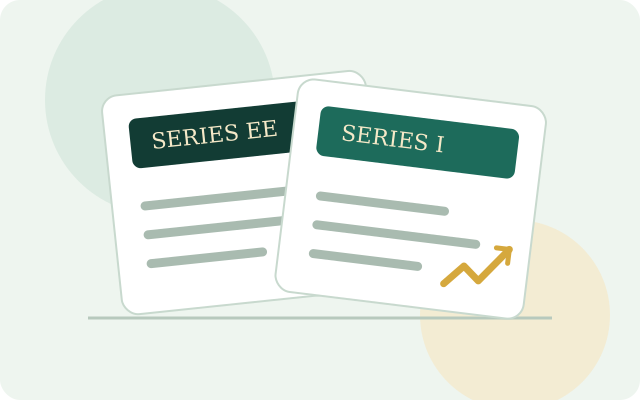
Compare Series EE and I Bonds, learn TreasuryDirect purchase and ownership rules, and understand redemption and federal tax treatment.
Read the savings bond guideBond Atlas explains U.S. Treasury securities, savings bonds and I Bonds—from TreasuryDirect account rules and auction mechanics to market prices, inflation, credit risk and taxes.

Informational website: General education only, not personalized investment, legal or tax advice. Bond Atlas is independent and is not affiliated with the U.S. Treasury or TreasuryDirect. Terms and disclaimer
Each guide stands alone, but together they explain how U.S. Treasury securities, savings bonds and other fixed-income investments work.
Compare Series EE and I Bonds, learn TreasuryDirect purchase and ownership rules, and understand redemption and federal tax treatment.
Read the savings bond guide
Composite rates, inflation adjustments, purchase limits, redemption rules, taxes and the difference between I Bonds and TIPS.
Read the complete I Bond guide
What TreasuryDirect.gov does, how savings bonds and marketable Treasury auctions differ, and why account support belongs on the official website.
Learn about TreasuryDirect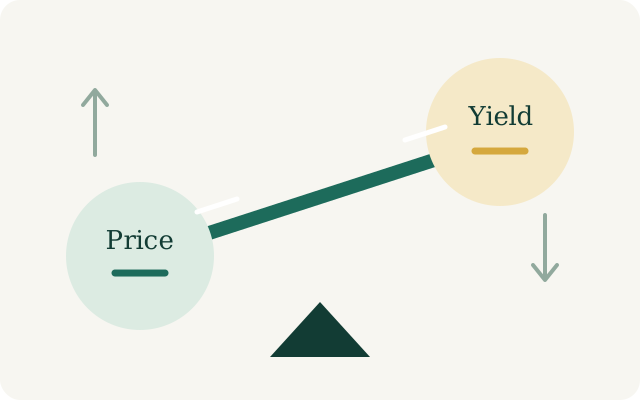
Why prices and yields move in opposite directions, how duration measures sensitivity, and what happens at maturity.
Understand prices and yields
Bills, notes, bonds, TIPS and FRNs; primary auctions, secondary trading and the yield curve explained.
Follow Treasury securities
A structured review of cash flow, leverage, interest coverage, ratings, covenants, seniority and bond spreads.
Use the research checklistOriginal guides that connect interest calculations with legal terms, taxes and practical research documents.
Fixed interest, the 20-year doubling provision, TreasuryDirect limits, redemption and taxes.
Explore EE BondsReal coupons, CPI-U adjustments, deflation, market prices, federal taxes and TIPS versus I Bonds.
Understand TIPSGeneral obligation and revenue bonds, tax-exempt interest, credit research, calls and EMMA.
Research municipal bondsNormal, flat and inverted curves, yield spreads, real yields and the limits of recession signals.
Read the yield curve guideInterest-rate, credit, liquidity, inflation, call, reinvestment and bond fund risks.
Review bond risksInterest income, Treasury exemptions, municipal bonds, savings bonds, discounts and sales before maturity.
Review the tax mapWhat you own, how returns are generated and how fund structure, maturity and risks differ.
Compare the structuresPlain-English definitions of savings bond, Treasury, pricing, yield and credit terminology.
Look up bond terms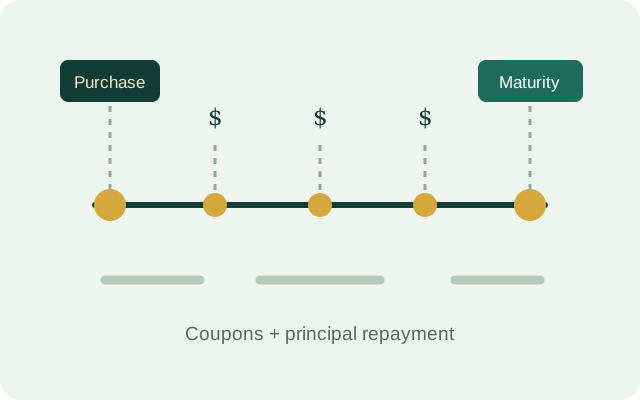
When you buy an individual bond, you are lending money to an issuer. The bond's terms define the principal, interest or coupon, payment dates and maturity date. Savings bonds accrue value instead of distributing cash coupons, while marketable Treasury securities can change in price before maturity.
The issuer, tax treatment, trading rules and inflation protection can change substantially from one security to another.
| Type | Issuer and structure | Key distinguishing feature | Important risk or limitation |
|---|---|---|---|
| Treasury bills, notes and bonds | Marketable debt of the U.S. Treasury | Can be bought at auction and traded before maturity | Market prices can fall; nominal payments lose purchasing power to inflation |
| TIPS | Marketable Treasury inflation-protected securities | Principal adjusts with CPI-U; fixed coupon applies to adjusted principal | Real yields and market value can fluctuate; deflation and tax rules matter |
| Series EE and I savings bonds | Non-marketable U.S. savings bonds | Fixed-rate EE structure or fixed-plus-inflation I Bond structure | Purchase caps, 12-month lockup and possible three-month interest penalty |
| Corporate bonds | Debt issued by companies | Payments depend on the issuer's creditworthiness and contract terms | Default, call, liquidity and interest-rate risks |
| Municipal bonds | Debt issued by state and local governments and related entities | Interest may be exempt from federal and sometimes state income tax | Credit risk and tax treatment vary; exemptions are not automatic in every case |
| Bond ETFs and mutual funds | Pooled portfolios holding bonds or other assets | Fund shares provide exposure to many holdings | No individual bond maturity date for the investor; fees and market-price risk |
Bond Atlas explains the concepts. The responsible agencies and organizations publish current rates, rules, filings and disclosures.
The official source for U.S. savings bonds, Treasury accounts, auction information and current product rules.
Visit www.treasurydirect.govSEC investor education, public-company filings and securities offering documents for independent research.
Browse official resourcesFederal investment-income rules and the conditional education exclusion for qualifying savings bond interest.
Read IRS Publication 550Fixed-income market information, municipal disclosures and tools for researching bond structures and risks.
Visit MSRB EMMAA bond is a debt security. An investor lends money to an issuer, such as a government or company, and the issuer agrees to make specified payments and repay principal under the bond's terms. A bond is not a bank deposit, and different bonds carry different risks.
No. “Bond” is a broad category of debt securities. Series I savings bonds are a specific, non-marketable U.S. savings bond with a rate linked to inflation and special purchase and redemption rules. You cannot sell an I Bond to another investor on a secondary market.
No. Bond Atlas is an independent informational website. TreasuryDirect.gov is the official U.S. Treasury service for eligible savings bond and marketable Treasury accounts. We do not provide account access or support.
Existing fixed-rate bond prices generally move opposite to market interest rates, but the size of a price change also depends on duration, credit conditions, liquidity, embedded options and other factors. Floating-rate and inflation-linked securities behave differently.
No. Savings bond interest is generally subject to federal income tax, although it is exempt from state and local income tax. A limited federal education exclusion may apply when all eligibility rules are met. Read our bond tax guide and consult the current IRS rules.
No. Bond Atlas publishes general educational material. We do not assess your finances, recommend securities, arrange transactions or promise an outcome. Official sources and qualified professionals can help with decisions that depend on your circumstances.